
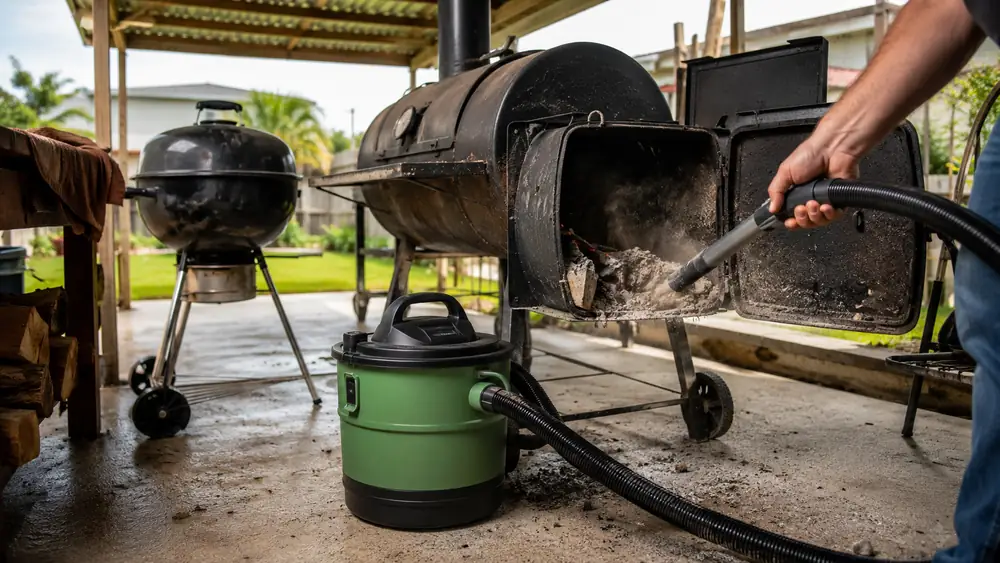
Last spring, after nearly setting my garage on fire with a regular shop vac and a pan of ash I swore was cool, I finally ordered a PowerSmith PAVC101 ash vacuum, the ten amp model built specifically for pulling cooled ash out of a firebox instead of pretending a wet and dry vac can do that job safely. That scare, a scorched filter bag and a garage that smelled like a campfire for two days, is the whole reason this vacuum exists in my life. Fourteen months and more Sunday cookouts than I can count later, here is the honest rundown on what the PowerSmith has actually done for me, on both my 22-inch kettle and my old offset stick burner.
I should say up front where this fits into my setup. I run a 22-inch charcoal kettle for weekly family cooks and a used offset stick burner out back that I bought secondhand a few years ago and had to reseason and patch before it held smoke worth a damn. Ash management is a different animal between those two grills. The kettle drops a manageable pan of gray ash under short weekly cooks. The offset firebox is a different story, full-size splits leave behind chunks, clinker, and a layer of fine powder that used to take me twenty minutes with a dustpan and a rag over my face. That's the job the PowerSmith actually had to prove itself on.
The Quick Verdict
After fourteen months and countless cooled-ash cleanups on a kettle and a secondhand offset, the PowerSmith earns its shelf space. It's genuinely safer and faster than a repurposed shop vac. It's not maintenance free, and the filter is a real chore in coastal humidity, but I'd buy it again.
Amazon Check Today's Price →Still Cleaning Ash Out With a Dustpan and a Shop Vac? Here's What Changed for Me.
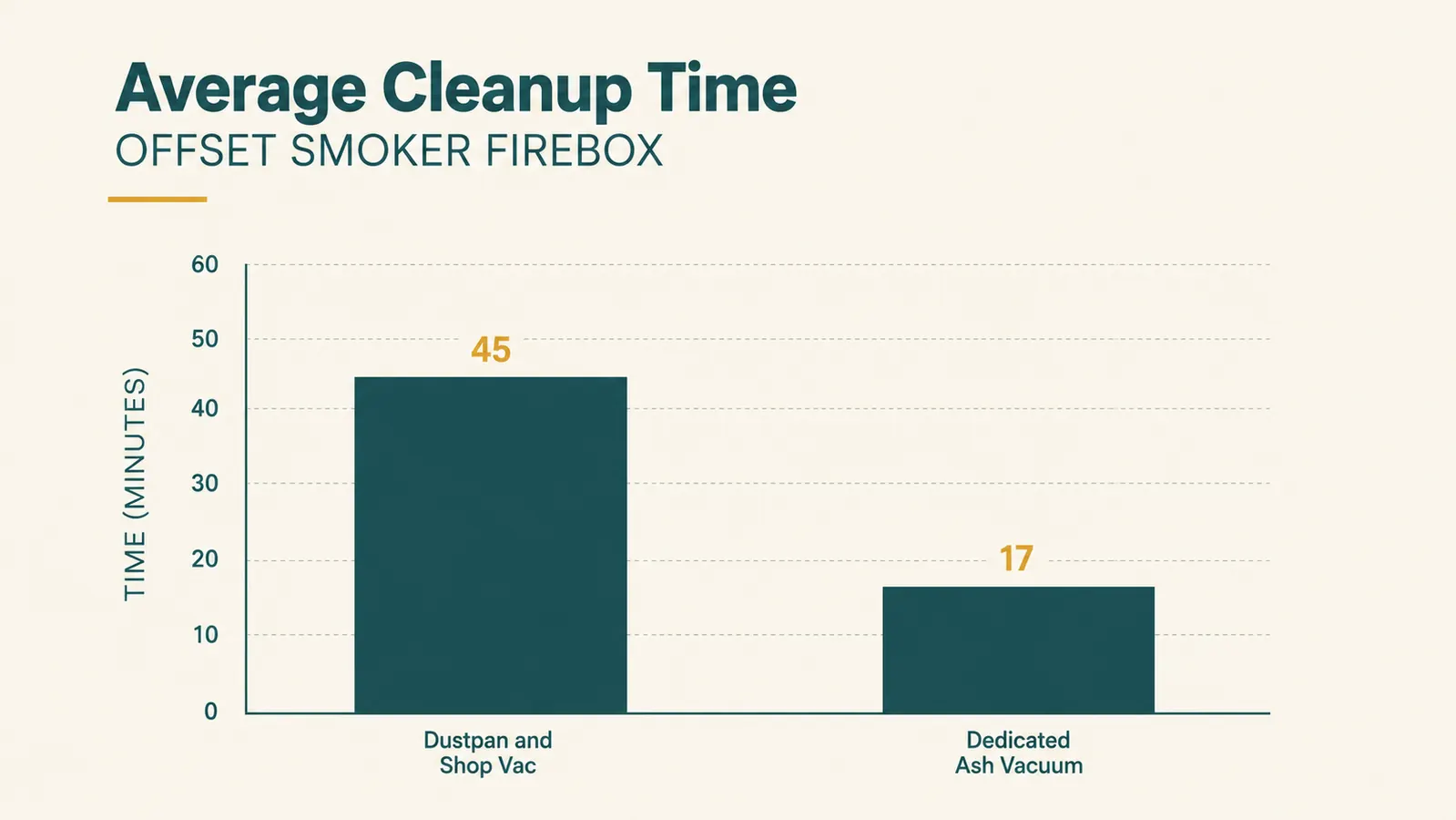
The PowerSmith ash vacuum cut my offset firebox cleanup from about forty five minutes to fifteen or twenty, and it's built for cooled ash instead of a repurposed sawdust vac. See today's price and current availability on Amazon.
Amazon Check Today's Price on Amazon →How I've Used It
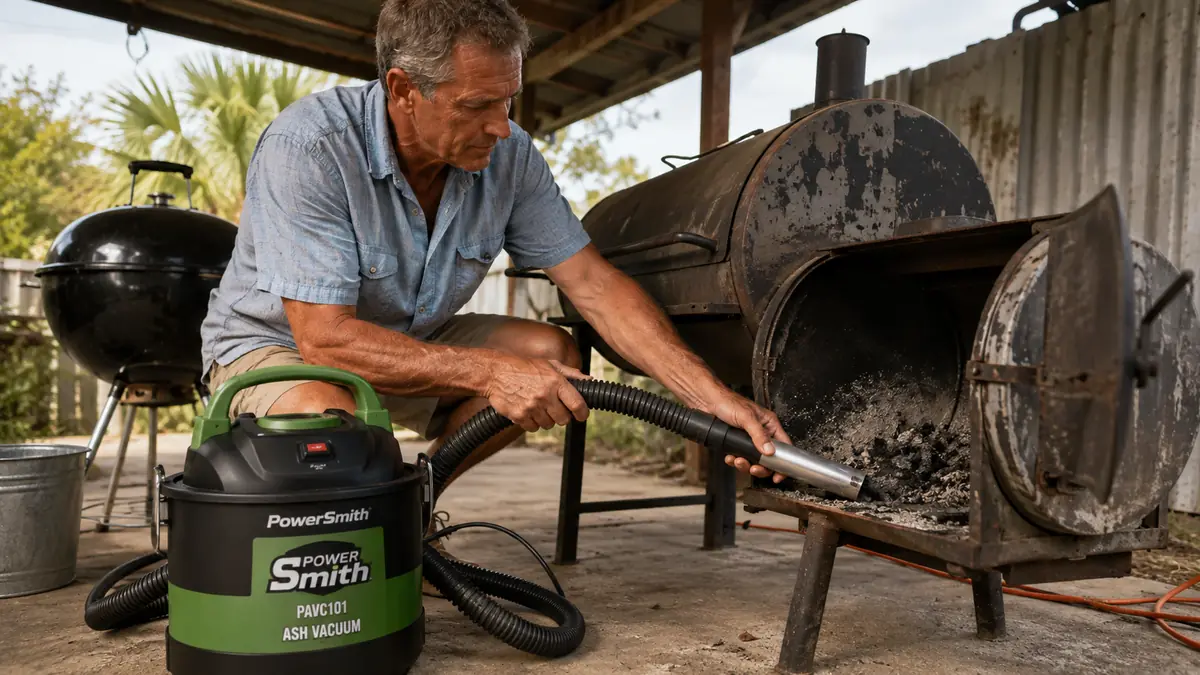
I bought the PAVC101 online after Hollis, my neighbor, mentioned his brother-in-law up in Houston ran one on a stick burner and never looked back. I plugged it in that first weekend and ran it on the kettle ash pan, then a week later worked up the nerve to try it on the offset firebox once I was sure everything inside had gone stone cold. The canister is metal, not plastic, which mattered to me after melting part of a plastic shop vac housing the year before, and the hose has a rigid metal tube section on the end instead of flimsy plastic, so it can scrape along the firebox floor without flexing away from the ash the way a soft hose does.
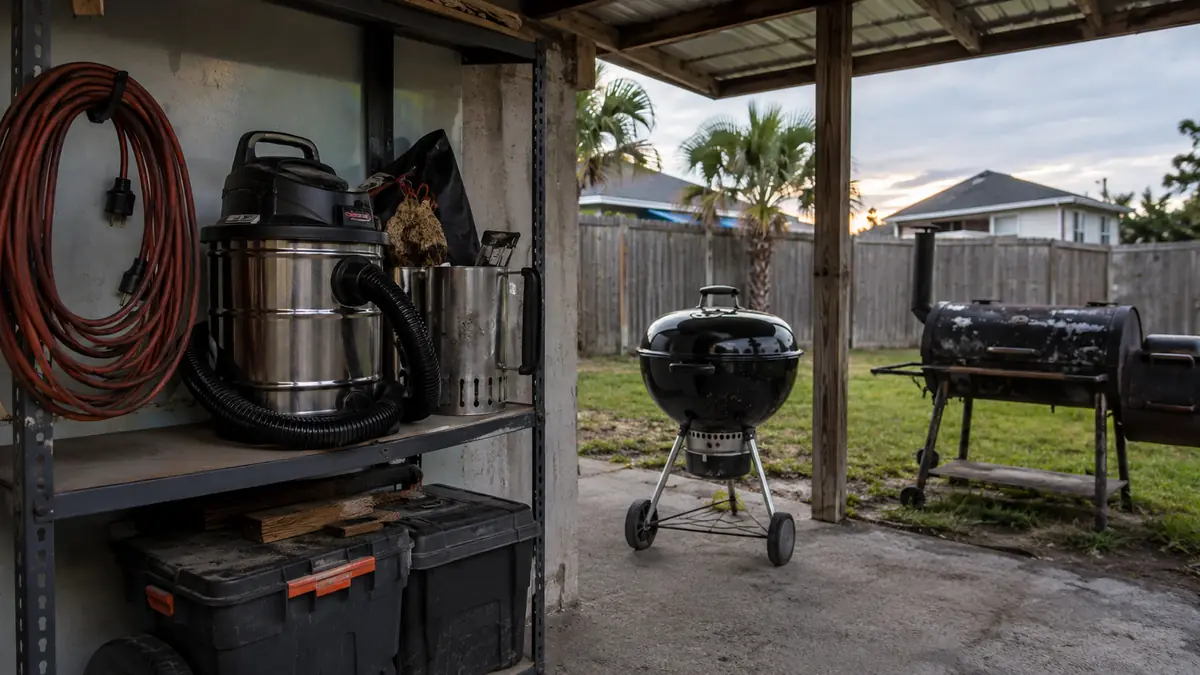
The PowerSmith lives on a shelf in my garage now, next to the tote where I keep my chimney starter and spare charcoal, hose coiled loosely around the canister so it doesn't crack in the heat. Power is the one hiccup in my setup. The vacuum's cord doesn't reach from the covered outlet by the patio lean-to Beto helped me build all the way out to where the offset sits, so I keep a twenty five foot outdoor rated extension cord looped over a hook near the same shelf just for this job. It's a small extra step, but on a coastal patio where an uncovered outlet corrodes fast, I'd rather run an extra cord than mount a new outlet closer to the smoker.
Why I Stopped Using a Shop Vac on Cooled Ash
Before this, I used a regular wet and dry shop vac for ash, the same one I use for sawdust and garage cleanup. It worked, more or less, until the day it didn't. Fine ash is not like sawdust. It's talcum powder fine, it gets past standard shop vac filters and either blows back out the exhaust in a cloud or packs into the motor housing, and if there's even a stray ember buried in that cooled pile, a plastic canister and a paper filter bag are exactly the wrong things to have near it. That's what happened to me. I thought a pan of ash from the night before was cold. It wasn't, not all the way through, and I watched a scorch mark spread across the inside of my shop vac's filter bag before I yanked the cord.
The PowerSmith is built around that exact failure point. The canister is metal instead of plastic, the filter is a heavier gauge designed to handle fine particulate instead of clogging or melting, and the whole unit is marketed specifically for cooled ash and embers rather than wet debris or sawdust. I'm not going to pretend it makes handling ash risk free. Nothing does. But it's a meaningfully safer tool for the specific job than repurposing a general shop vac, which is what most of us reach for by default. I go through the full side by side, dedicated ash vacuum versus a regular shop vacuum, in a separate breakdown over on ash vacuum versus shop vacuum for grill cleanup.
Letting Ash Go Cold First: The Rule I Don't Break
Here's the thing nobody tells you in a product listing: the vacuum only does its job safely if you do yours first, and that means the ash has to be genuinely, all the way cold before it goes anywhere near the hose. I learned that the hard way with the shop vac, and I've carried the lesson over to the PowerSmith without exception. My rule is a minimum of twenty four hours after the last coal goes out, and out here with our humidity, I usually give it closer to forty eight, because damp ash holds heat differently than dry ash does, and a pile that looks gray and dead on top can still have a warm coal buried an inch down.
Before I run the vacuum, I push an old meat thermometer down into the deepest part of the ash pile, the same one I retired from cooking duty a few years back. If it doesn't read close to room temperature, I close the lid or the firebox door and walk away for another day. Hollis thinks I'm overly cautious about it, especially when he's hoping to get the offset going again for a Saturday cook. I don't care. A vacuum full of hot embers and fine dust is a genuine fire risk, and no amount of convenience is worth a garage fire. If you take one thing from this review, take that: let it go fully cold, check it, and only then reach for the vacuum.
Filling the Firebox and the Kettle Ash Pan: My Actual Routine
The kettle gets emptied almost every week. Sunday cooks with Kara, Beto, and the grandkids leave a manageable amount of ash, and once everything's cooled overnight I run the PowerSmith over the ash pan and the inside of the bowl for maybe five minutes before the next cook. It pulls fine ash out of the corners and off the vent screen better than a brush and dustpan ever did, and I'm not breathing a cloud of it into my face the way I used to.
The offset is a bigger job and I don't do it every single time I cook on it, more like every three or four uses, because clinker and fine ash build up slower than you'd think until suddenly the firebox airflow gets sluggish and my fire starts running dirty. That's usually my sign it's time. A full offset clean-out takes me fifteen to twenty minutes now, compared to closer to forty five with a dustpan, a shop vac, and a lot of coughing. I go through the exact routine, step by step, in a separate piece on cleaning out an offset smoker with an ash vacuum if you want the full walkthrough.
The Filter, the Humidity, and My Biggest Gripe
If you've read anything else I've written about gear on this coast, you know where this is going. Humidity is the tax I pay for living a few blocks off Ocean Drive, and it doesn't spare the filter. Fine wet ash clumps instead of staying loose and powdery, and a clumped filter loses suction fast. I tap the filter out over a garbage bag after every offset clean-out, and I've started washing it every month or so during our muggiest stretches, which the manual technically allows but isn't something I had to think about with a plain shop vac.
The other real gripe is hose length. It's long enough for the kettle without any complaint, but reaching the far corners of the offset firebox from a comfortable standing position takes some crouching and repositioning, especially with that extension cord already limiting how far I can wander from the outlet. Neither of these is a dealbreaker for me. They're the kind of thing you learn to work around after a season or two, the same way I've learned to work around wind on the kettle and rust on every piece of hardware I own out here. But I'd rather tell you up front than let you find out the hard way.
Alternatives I Considered
Before I bought this, I seriously considered just keeping the shop vac and being more careful, checking ash temperature more religiously and hoping for the best. The more I read about how fine ash behaves inside a standard shop vac motor, the less that felt like a real plan. I also thought about just sticking with a dustpan, a wire brush, and a lot of patience, which is genuinely fine if you cook once a month. It stopped being fine for me once I was running two grills most weekends.
What I Liked
- Metal canister and heavier filter feel built for ash, not repurposed from sawdust or garage debris duty
- Rigid hose tip scrapes along a firebox floor instead of flexing away from ash like a soft hose does
- Cut my full offset firebox clean-out from about forty five minutes to fifteen or twenty
- Noticeably less fine ash dust in the air and on me compared to a dustpan or shop vac
- A genuine safety upgrade over a repurposed shop vac for cooled ash and stray embers
Where It Falls Short
- Filter clogs fast in humid Gulf Coast air and needs frequent tapping and occasional washing
- Hose length is a bit short for comfortably reaching every corner of a full-size offset firebox
- Cord doesn't reach far outdoors, so I keep a dedicated extension cord just for this job
- Still entirely on you to confirm the ash is fully cold first, the vacuum doesn't make that call for you
The PowerSmith didn't make me careless about hot ash. It made the after part of the job fast enough that I actually do it every week instead of putting it off.
Who This Is For
This is for anyone running a charcoal kettle or, especially, a stick burner offset who's still using a dustpan or a repurposed shop vac on ash. If you cook for a crowd on a regular schedule the way I do most Sundays, or if you're dealing with humidity that clumps ash and charcoal the way ours does out here, the time savings alone justify it. I go through more of the specific reasons in 10 reasons an ash vacuum belongs in your grill shed.
Who Should Skip It
If you've only got a small gas grill with nothing to vacuum, or you cook so rarely that a dustpan every few months does the job fine, this is more tool than you need. And if you're not going to commit to the cold ash rule, waiting a full day or two and checking before you vacuum, I'd honestly rather you not buy this at all than get careless with it. For the maintenance side of ownership, including exactly how much filter babysitting this thing demands, read my honest PowerSmith ash vacuum review.
Ready to Stop Breathing Ash Dust Every Cleanup?
Fourteen months in, this is still the tool that made me actually clean my offset on schedule instead of putting it off. Check today's price on Amazon and see if it's in stock.
Amazon Check Today's Price on Amazon →