
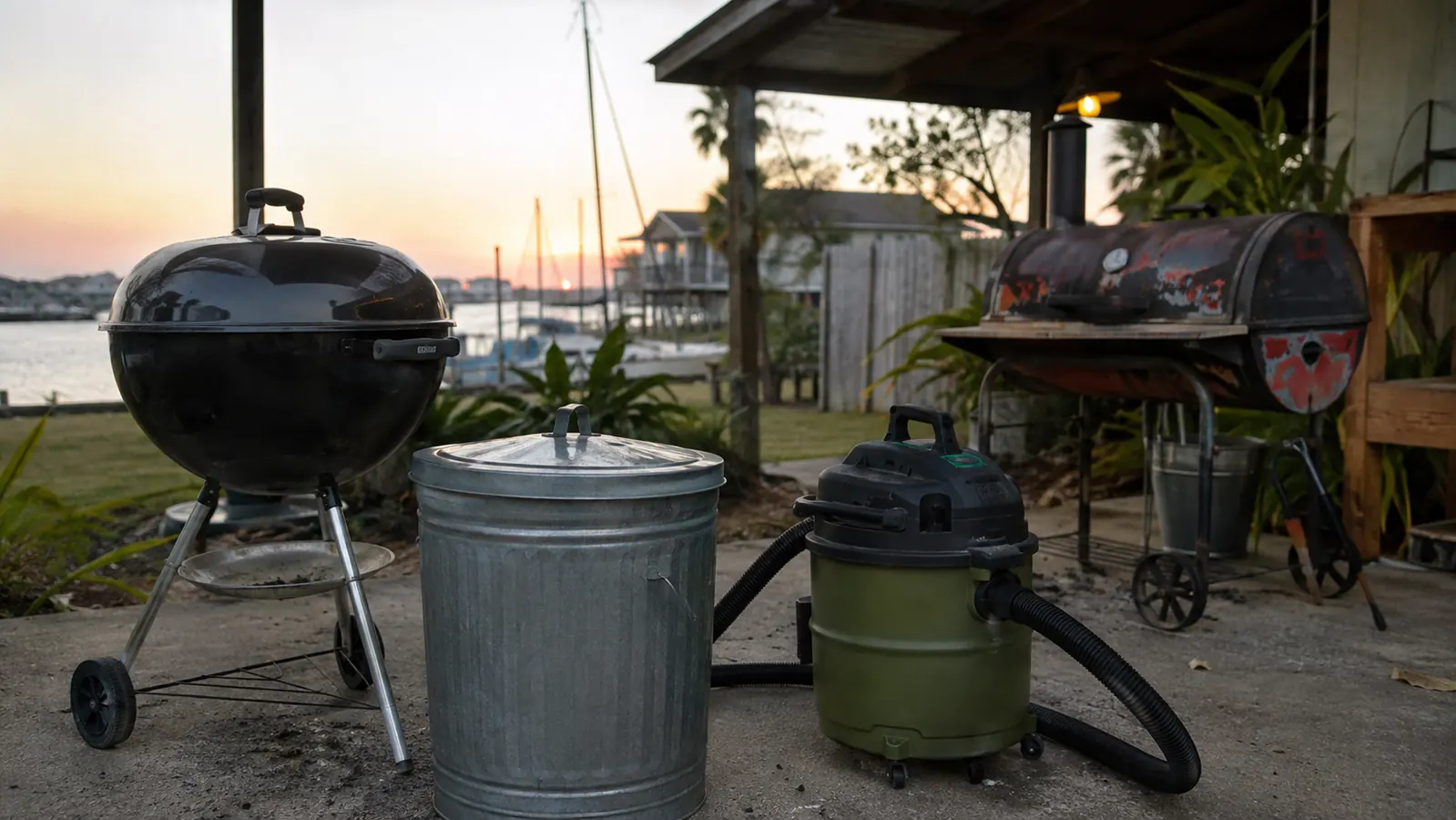
A few weeks back at a fish fry down at the marina, a guy two slips over swore his kettle ash had been cold since the night before and dumped a full pan of it straight into a plastic trash bag. About ten minutes later somebody smelled smoke, and by the time we pulled the bag off the dock, it had burned a hole the size of a fist through the bottom and scorched the planking underneath. Nobody got hurt and the fire department never had to come out, but it rattled me enough that I want to write the review nobody puts on a product listing. Not whether the PowerSmith PAVC101 ash vacuum works, because it does, and I already covered that in the long-term piece I wrote after my first season owning one. This one is about what actually goes into running this thing safely and keeping it working, week after week, in Gulf Coast air thick enough to rust a hinge shut by August.
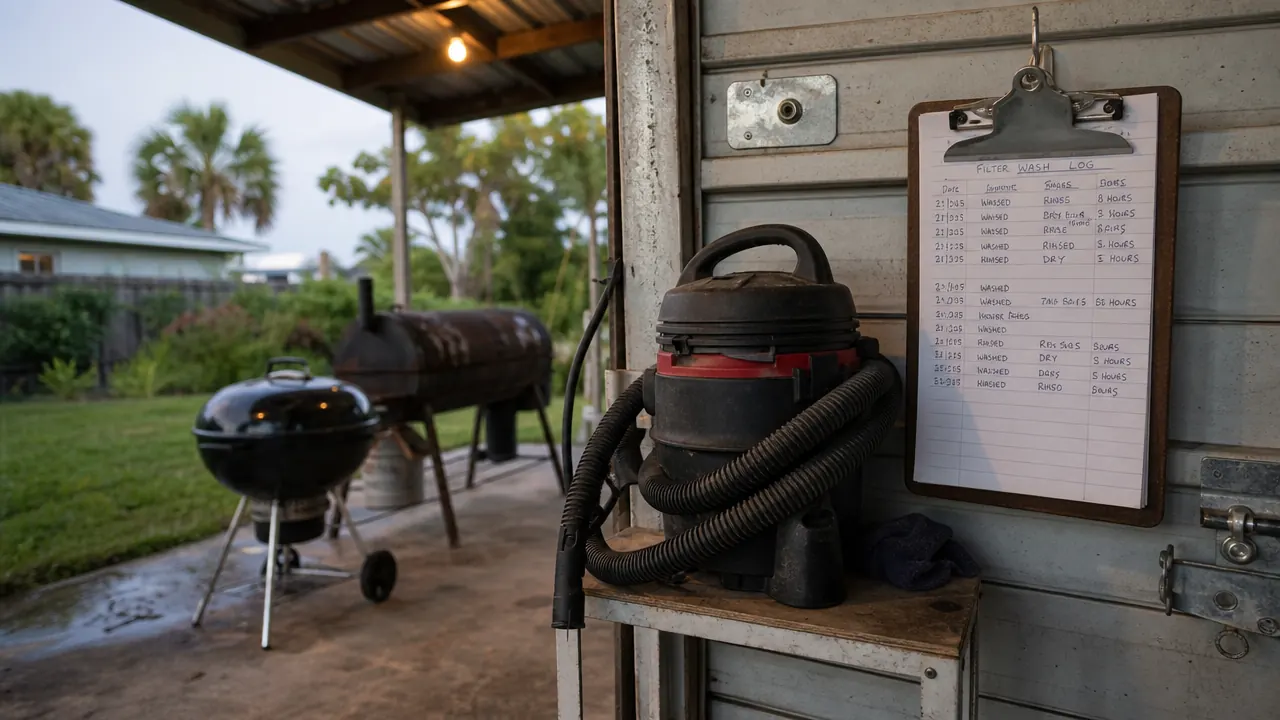
I'm Dale Whitcomb. I cook most Sundays for whoever shows up, usually my daughter Kara, her husband Beto, and my grandkids Tessa and Ruben, on a 22-inch charcoal kettle and a secondhand offset stick burner I patched up myself out back. I've had this PowerSmith vacuum well over a year now, and unlike a lot of reviews written after one good cookout, mine comes from the boring habit of tracking it, a clipboard nailed to the inside of my garage door where I log the date every time I empty, tap out, or wash the filter. That log is how I can tell you exactly what this tool actually asks of you, not just what it promises on the box.
The Quick Verdict
The PowerSmith pulls cooled ash safer and faster than anything else I've used, no argument there. But it's not a set-it-and-forget-it appliance. The filter demands real attention in Gulf Coast humidity, and the cold-ash discipline it requires is entirely on you.
Amazon Check Today's Price →Still Trusting a Trash Bag to Hold 'Cooled' Ash?
That fish fry scare is exactly why a dedicated ash vacuum exists. The PowerSmith PAVC101 is built to handle cooled ash and embers safely, something a trash bag or a repurposed shop vac was never designed for. See today's price and current availability on Amazon.
Amazon Check Today's Price on Amazon →How I Actually Test This Stuff
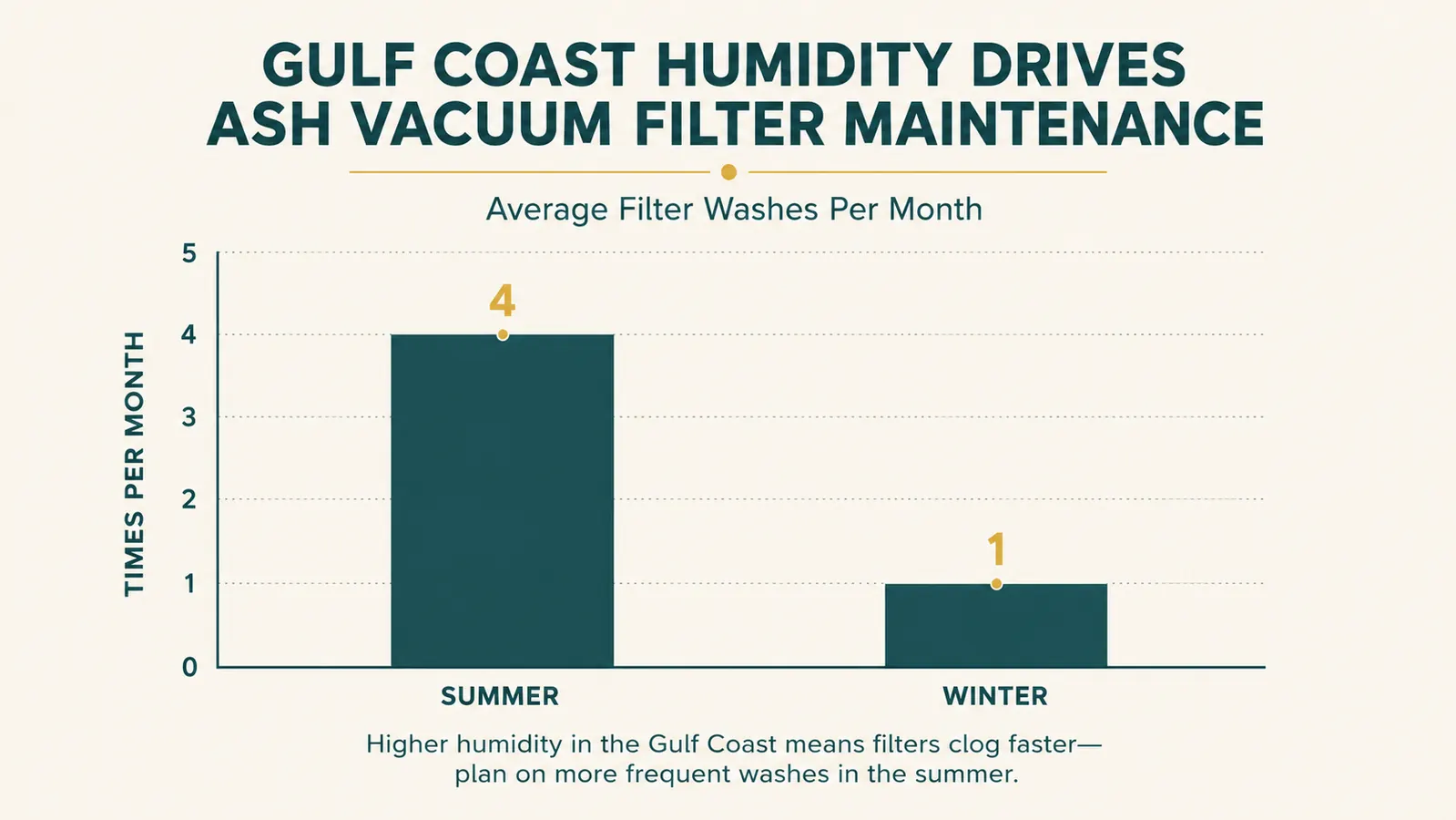
Most ash vacuum reviews get written after one cookout and a quick once-over in the driveway. I didn't do that. I've run this PowerSmith through four full seasons now, kettle cleanups almost every week and offset clean-outs every few uses, and I write down what actually happens instead of trusting my memory a year later. That clipboard tells me the filter got washed nine times last summer alone and only three times this past winter, which by itself tells you most of what you need to know about how humidity drives the maintenance schedule on this machine.
I've also run it on things it isn't built for, on purpose, just to know the honest limits. Fine dry ash from the kettle, no problem, it pulls that up fast and doesn't choke. A handful of bark and unburned wood chips from around the offset firebox is a different story, the suction bogs down fast and I end up finishing the corners with a brush anyway. That's not really a knock on the PowerSmith. It's built and marketed for cooled ash, not general shop debris, and it's worth knowing that going in instead of finding out mid-cleanup with a firebox half done.
The Cold-Ash Rule Nobody Enforces For You
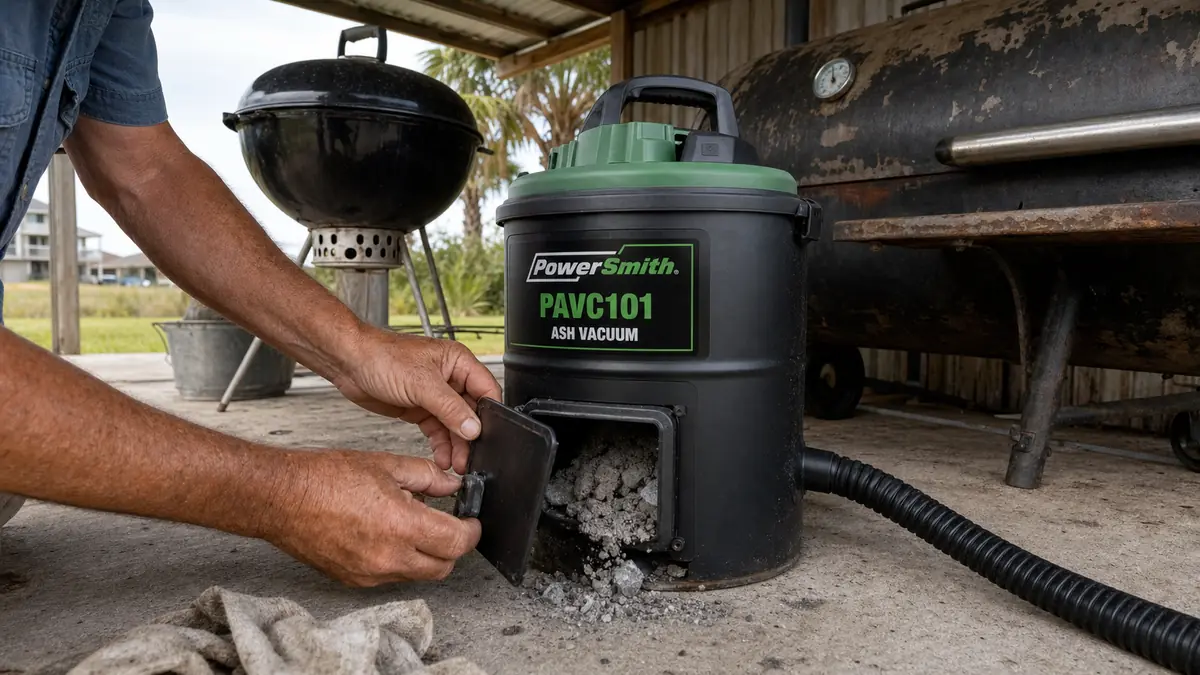
Here's what nobody puts in the marketing photos. Ash is an excellent insulator, which is exactly why a bed of coals stays warm long after the flames are gone, and it's also exactly why a pile that looks gray and dead on top can hide a live coal an inch or two down for a day or more, sometimes longer in damp weather. House and garage fires that start from ash that got dumped, bagged, or vacuumed too soon are common enough that fire departments put out reminders about it every year. The vacuum doesn't know or care whether your ash is actually cold. That part is entirely on you, every single time.
I take that seriously enough that I've changed how I keep the grandkids clear on cleanup day. Ruben's five, and curious the way five-year-olds are, and he reached for an ash bucket last summer because it looked like it was just full of gray dust. It turned out fine, that particular batch really was cold, but it scared me more than it should have. Now I keep a galvanized bucket with a tight lid for spent ash, store it well away from the patio doors where the kids play, and I don't run the PowerSmith at all until I've checked and rechecked that everything inside the firebox has gone stone cold. If you've got kids or grandkids around your grill setup, build that same margin in before you ever plug this thing in.
The Filter Is the Real Job, Not the Vacuum
If I'm honest, the vacuum part of this vacuum is the easy part. The filter is the actual job. It's a heavier pleated cloth style insert built to catch particulate finer than sawdust, and it works well when it's clean, but fine wet ash clumps against those pleats fast in our humidity and chokes off the airflow. You'll hear it before you see it, the motor pitch climbs to a higher whine and the suction at the hose tip drops off noticeably. That's your signal to stop, pull the canister open, and deal with the filter before you keep going.
I made one mistake with this filter that cost me a full week of setup headaches. I washed it after a muggy offset clean-out, reassembled the PowerSmith that same afternoon because I was in a hurry, and about ten days later caught a faint mildew smell coming off the canister. The filter hadn't dried all the way through before I sealed it back inside a closed metal drum, and that's exactly the environment mold wants. Now I hang it on a hook in the garage for a full two days before it goes back in, and I keep a spare filter on the shelf so a slow-drying wash day never leaves me without a working vacuum on a Sunday morning.
Suction: What It Beats, and What It Doesn't
Against a shop vac pressed into ash duty, there's no real contest. I go through the full side-by-side breakdown in a separate piece on ash vacuum versus shop vacuum for grill cleanup, but the short version is that a shop vac's plastic canister and paper filter bag were never built to handle fine hot particulate, and the PowerSmith's metal canister and heavier filter were. On cooled ash specifically, it's not close.
Where I'd steer you toward honest expectations is heavier debris. Wood chips, bark, small charcoal chunks, any of the stuff that ends up scattered around a firebox after a long cook, the PowerSmith struggles with in a way a full-size garage shop vac doesn't. It's a purpose-built tool, not a do-everything one, and I still keep my old shop vac around for sawdust and general garage cleanup. Buying this one doesn't retire that one, it just gives that one a safer job to do instead, which is honestly how it should be.
Filter Replacement, Not Just Washing
Washing keeps the filter going for a while, but it doesn't last forever. Mine started letting fine ash straight through to the motor housing around the ten month mark, a fine gray film on the inside of the exhaust vent that wasn't there before, and washing didn't fix it, because the pleats themselves had started to sag and lose their shape from repeated soaking. That's when I ordered a replacement rather than keep nursing the original along. PowerSmith sells replacement filters separately, and having a spare on the shelf, the same one I mentioned for drying time, means a worn-out filter is a five minute swap instead of a delayed cookout the next Sunday.
How long yours lasts depends almost entirely on how often you're washing it and how thoroughly you dry it in between each wash. If you're running an offset like mine every few uses and washing the filter nine or ten times over the humid months, plan on replacing it at least once a year, maybe sooner. If you're only cleaning out a kettle every week or two and the air where you live isn't fighting you the way ours does out here, you might get well past a year out of the original filter before it needs swapping instead of just scrubbing.
Noise, Cord Reach, and the Hose That Almost Reaches
It's not whisper quiet. Running the PowerSmith on the patio before eight on a Sunday morning is a good way to have Marisol come out in her robe asking what on earth I'm doing out there. I've learned to save the offset clean-out for after everyone's up, or at least after coffee's made, mostly for peace in the house rather than any complaint from the neighbors, since Hollis two doors down runs a leaf blower most Saturdays that's louder than anything I own.
The vacuum's own power cord is short, maybe six feet, clearly meant for plugging into a nearby outlet rather than roaming the yard, which is one reason I keep a twenty five foot outdoor rated extension cord on a hook for this exact job, since the covered patio outlet doesn't reach all the way out to the offset. The hose itself runs a bit short too, somewhere around four feet with the rigid metal tip attached, plenty for the kettle but short enough that I'm repositioning the whole canister two or three times to reach every corner of the offset firebox instead of standing in one spot and working the hose around it.
Build Quality After a Long Season
The metal canister has held up well, no dents or rust spots after well over a year outside under our covered lean-to, which matters more here than it would inland since salt air chews through anything cheap in a season or two. The latches that seal the canister lid have gotten a little stiffer with grit working into the hinges, nothing a wipe-down doesn't fix, and the small caster wheels are the one part I'd call genuinely weak. They catch on the gap between our concrete patio slabs more than I'd like, and I end up half-carrying, half-rolling the PowerSmith out to the offset most weeks instead of just wheeling it out like I'd expected to.
What I Liked
- Genuinely pulls cooled ash and embers safer than a repurposed shop vac, no contest there
- Metal canister and heavier filter have shrugged off salt air and a year of outdoor storage without rust
- Log-tracked over four full seasons, not a one-cookout impression
- Handles the kettle's weekly ash load in a few minutes flat
- Replacement filters are sold separately so a worn one doesn't retire the whole vacuum
Where It Falls Short
- Filter needs frequent washing and full drying in humid weather, or it clumps and can mildew if reassembled too soon
- Filter itself wears out, expect to replace it at least once a year under heavy humid-climate use
- Struggles with wood chips, bark, and charcoal chunks, it's built for fine cooled ash specifically
- Motor is loud enough to wake the house on an early morning cleanup
- Both the power cord and the hose are shorter than you'd want for a full-size offset firebox
- Small caster wheels catch on uneven patio concrete
The vacuum doesn't decide when your ash is cold. That call, every single time, is still yours to make.
Who This Is For
This is for anyone running a real fire, kettle, offset, or both, who's tired of choking on ash dust with a dustpan or risking a repurposed shop vac on something that might not be as cold as it looks. If you cook for a crowd on a regular schedule the way I do most Sundays, and you're willing to actually keep up with the filter and replace it when washing stops working, the PowerSmith earns its shelf space. I laid out the full ownership story, extension cords and all, in my long-term PowerSmith review.
Who Should Skip It
If you grill on gas and never touch ash, this obviously isn't for you. If you cook on charcoal only occasionally, once a month or less, a dustpan and a galvanized bucket will do the job fine and you won't need to babysit a filter or track its lifespan on a clipboard. And if you're not willing to build in real cold-ash discipline, waiting a full day or two, checking with a thermometer, keeping kids clear, I'd rather you skip this entirely than get careless with a vacuum full of fine ash and a stray coal. I tell the fuller story of why I bought one in the first place over in the ash vacuum that saved my secondhand offset, and the step-by-step routine lives in how I clean out the offset with it.
Ready to Handle Ash the Way It Actually Deserves to Be Handled?
A trash bag or a repurposed shop vac was never built for this job. The PowerSmith PAVC101 was. Check today's price and current availability on Amazon.
Amazon Check Today's Price on Amazon →