
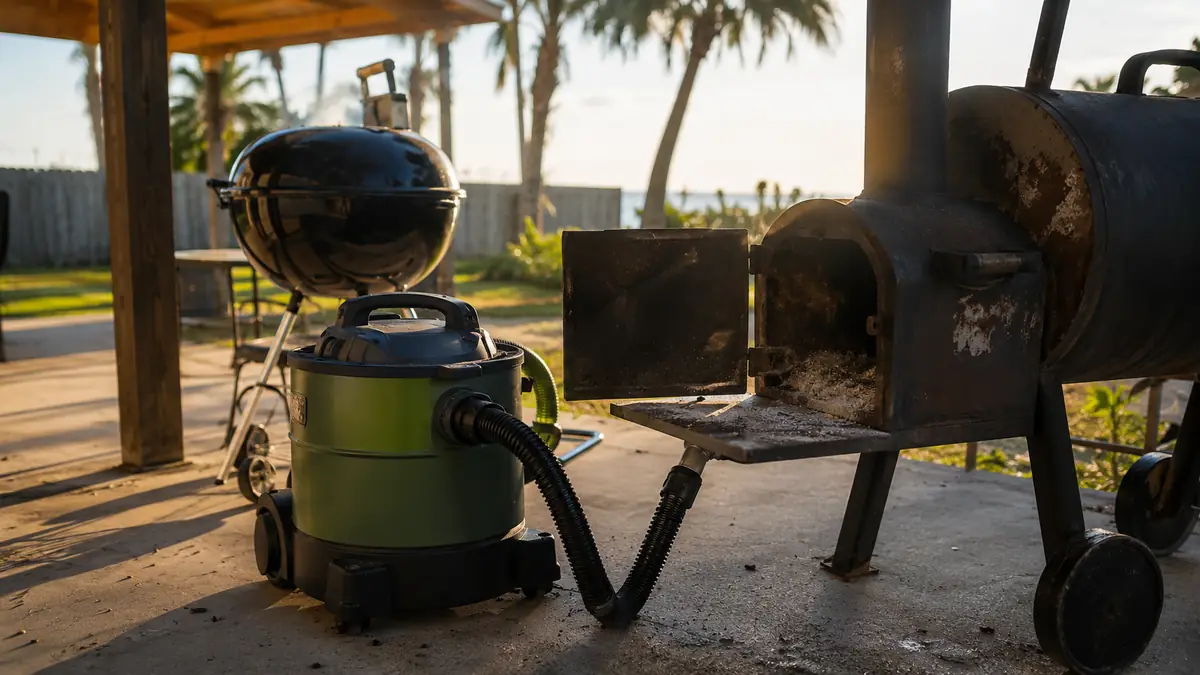
Every grill season out here on the Gulf Coast, I used to run the same Monday morning ritual: dig through last night's cooled ash pile in the offset firebox with a dustpan, cough through a cloud of fine gray dust, and swear I'd find a better way before the next Sunday cook. I finally did. It's a PowerSmith ash vacuum, the ten amp PAVC101 model, built with a metal canister for pulling cooled ash out of a firebox instead of asking a regular shop vac to do a job it was never built for. Fourteen months in, I've settled on ten specific reasons this tool earned a permanent shelf in my garage next to the chimney starter, and I want to walk through every one of them plainly, including the one rule I never bend.
I run two grills, a 22-inch charcoal kettle I've had for years and a used offset stick burner I bought secondhand and had to reseason before it held smoke worth a damn. Ash management looks different on each one, and the PowerSmith handles both, but the reasons it earns its keep go well past just being faster. Here's what actually changed once I put it to work.
Still fighting cooled ash with a dustpan and a shop vac that wasn't built for it?
Here are ten specific reasons a dedicated ash vacuum changed my Sunday cleanup routine, starting with how much time it actually gets back. See today's price and current availability on Amazon.
Amazon Check Today's Price on Amazon →It shrinks a forty five minute chore into fifteen
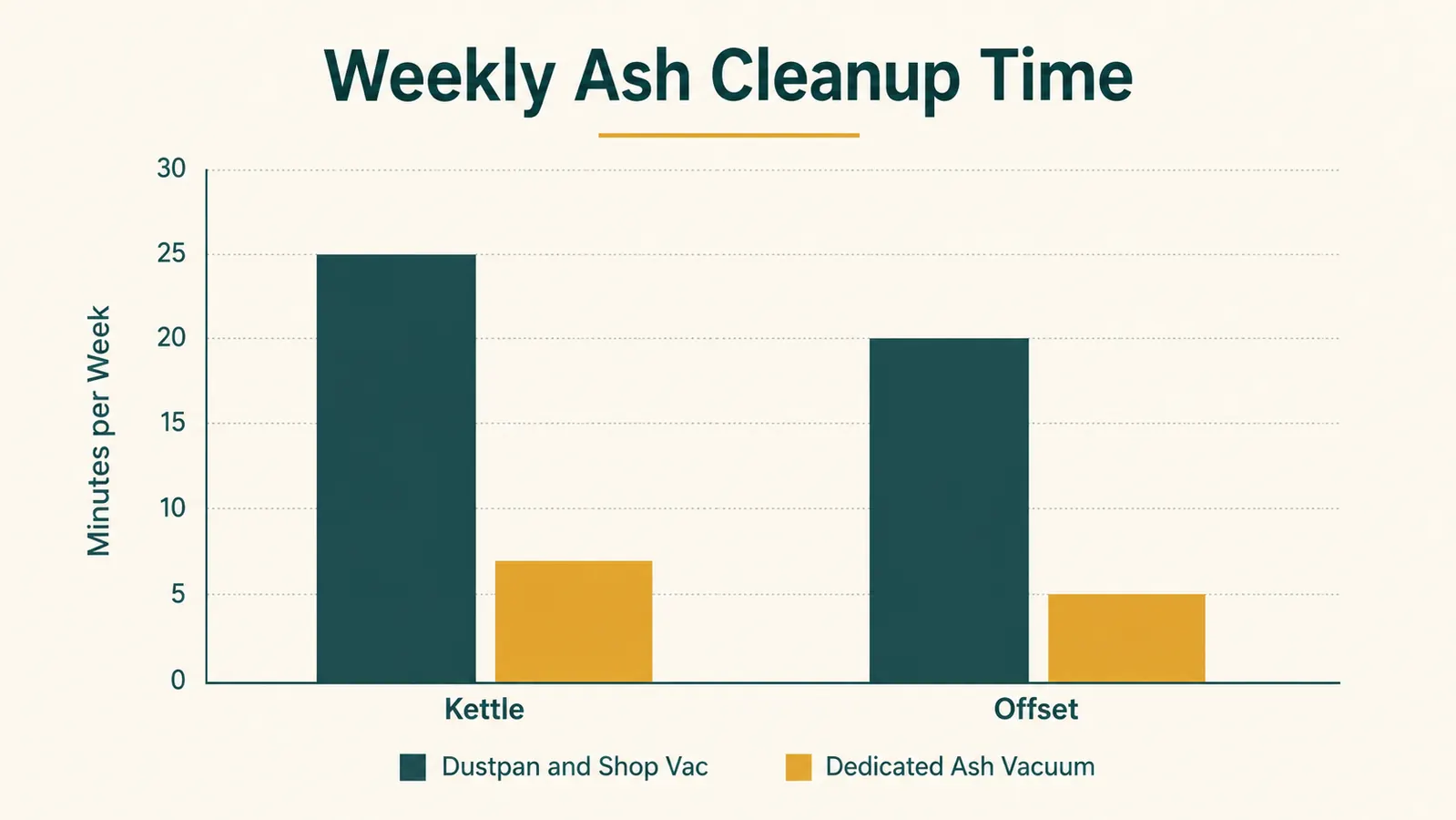
A full offset firebox, splits down to clinker and a fine gray powder layer, used to take me a dustpan, a rag over my face, and the better part of forty five minutes. Running the ash vacuum over the same firebox now takes fifteen to twenty minutes, corners included. That time difference is the whole reason I actually get the cleanup done on schedule instead of letting ash pile up over two or three cooks.
The metal canister and heavier filter are built for the one job a shop vac isn't
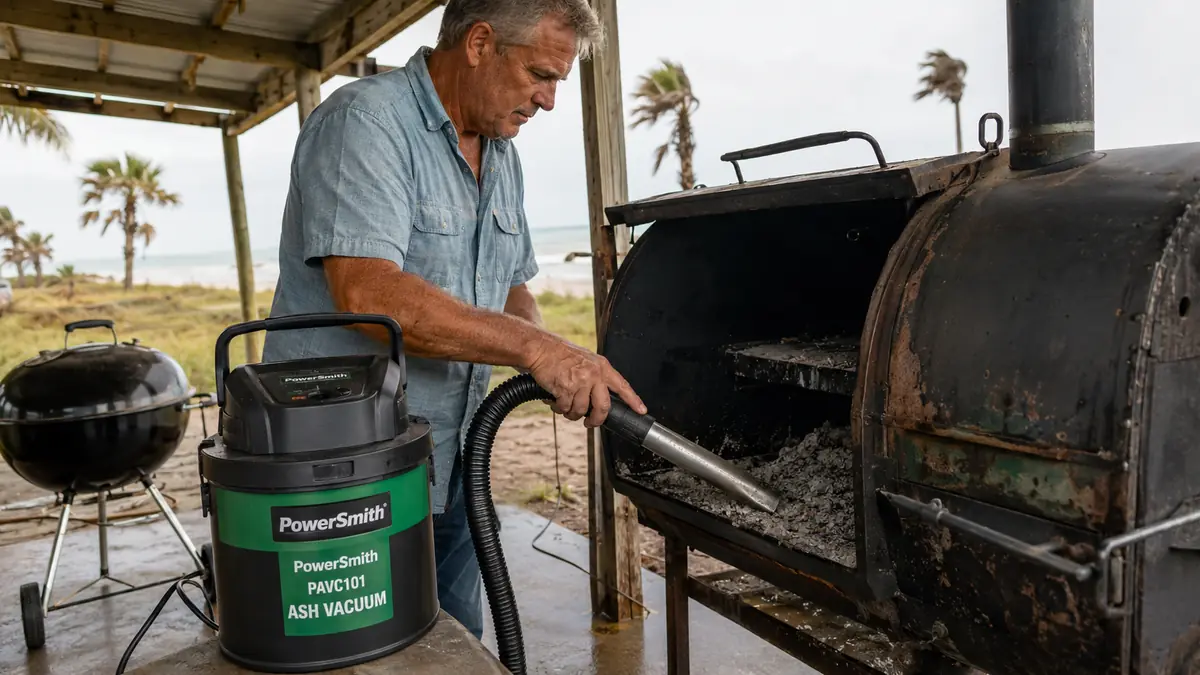
I used a regular wet and dry shop vac on ash for years until a pan I swore was cold scorched clean through the plastic filter bag inside. This ash vacuum's canister is metal, not plastic, and the filter is a heavier gauge meant for fine ash rather than sawdust. That's a real safety upgrade over a general shop vac. It is not a substitute for waiting. I still give ash a full day, usually two out here with our humidity, and I check it with an old meat thermometer before the hose goes anywhere near it. Nothing makes hot ash safe to vacuum. Cold ash, checked and confirmed, is the only ash this tool should ever touch.
The rigid metal hose tip scrapes instead of skating past clinker
A soft, flexible hose bends away from packed ash and chunks of clinker instead of pulling them up. This machine's hose ends in a rigid metal tube section I can press flat against the firebox floor and drag through the corners. It pulls up the stubborn stuff a plain dustpan, or a floppy shop vac hose, tends to leave behind.
I'm not breathing a cloud of ash anymore
Dry ash is talcum powder fine, and sweeping it with a dustpan puts a good bit of it right into the air in front of your face. A dedicated ash vacuum pulls it straight into a sealed canister instead. I don't finish a cleanup coughing or with gray dust on my forearms the way I used to, and that matters more to me every year.
Getting ash out fast means less time for it to hold moisture against metal
Humidity off the Gulf clumps ash instead of letting it stay loose, and damp ash sitting against a firebox floor or a kettle bowl for days is one more thing feeding rust in salt air that already goes after every screw and hinge I own. Clearing ash out on a regular schedule instead of putting it off is a small habit that protects the metal underneath it.
It made weekly kettle cleanup something I actually do
Sunday cooks with Kara, Beto, and the grandkids leave a manageable ash pan in the kettle, but manageable never meant I actually cleared it every week with a brush and dustpan. Five minutes over the ash pan and the vent screen once the coals go cold, and the kettle is ready for the next cook instead of sitting with old ash packed in the bottom.
Clear vents mean a cleaner burning fire on the next cook
Ash and clinker build up slower than you'd think until firebox airflow gets sluggish and the fire starts running dirty and hard to control. Running the vacuum through the vents and the firebox floor every three or four offset cooks keeps air moving the way it's supposed to, which means less fighting the fire and steadier smoke.
One dedicated tool covers both grills instead of two half measures
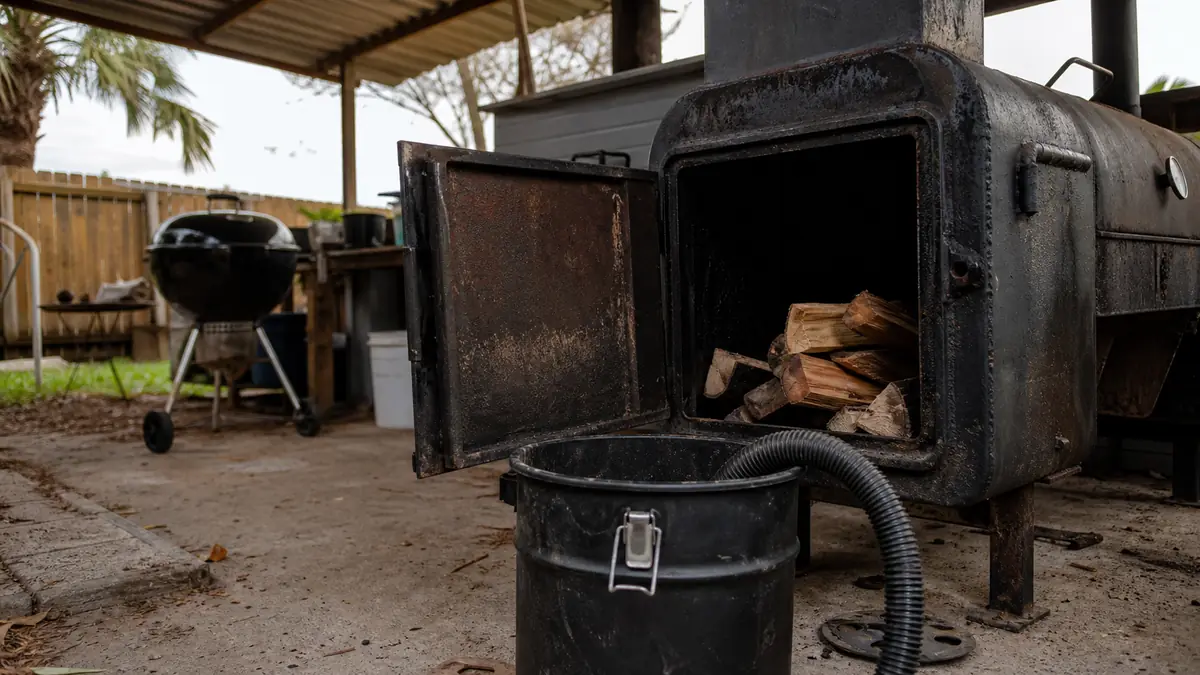
Before this, I was using a dustpan on the kettle and hoping for the best on the offset with a shop vac that wasn't built for either job. The PowerSmith handles the kettle's ash pan and the offset's firebox with the same tool and the same routine, stored on the same shelf. I'm not juggling two half solutions anymore.
My actual shop vac gets to stay a shop vac
I still keep a general shop vac around for garage cleanup and the occasional woodworking mess, and I don't want fine ash clogging that filter or riding around in the same canister as sawdust. Giving ash its own dedicated vacuum keeps both tools doing the job they're actually built for instead of cross contaminating one machine with two very different kinds of debris.
Cleanup stops eating into the next cook
When the grandkids are coming Sunday and I've fired the offset Saturday night for a long cook, the last thing I want hanging over me is a lingering ash chore. Fifteen minutes once everything's fully cooled Saturday evening, and the firebox is loaded and ready again before Tessa and Ruben are even out of bed.
What I'd Skip
What I'd skip is pretending a general shop vac can safely handle this job, or sticking with a dustpan once you're running two grills and cooking most Sundays the way I do. I'd also skip any temptation to shortcut the cold ash rule just because the PowerSmith feels sturdier than what you used before. It's a better built tool for cooled ash and stray embers, not a tool that makes hot ash harmless. Give it the full day, check it yourself, and only then reach for the vacuum. If you want the full walkthrough of how I actually use it on the offset, I've laid out every step in cleaning out an offset smoker with an ash vacuum.
Ash cleanup used to be the chore I dreaded most out of anything on the maintenance side. Now it's the one that takes the least thought, and that's the real reason it gets done every single time.
None of this replaces good judgment around a firebox full of cooled ash, and none of it happens if the tool sits unused on a shelf. For the longer, more detailed read on where this thing has held up and where it hasn't over fourteen months of Gulf Coast humidity, see my full PowerSmith ash vacuum review.
Ready to stop dreading ash cleanup on cook day?
Ten specific reasons, one dedicated tool. Check today's price and current availability on Amazon and see if it fits your setup.
Amazon Check Today's Price on Amazon →