
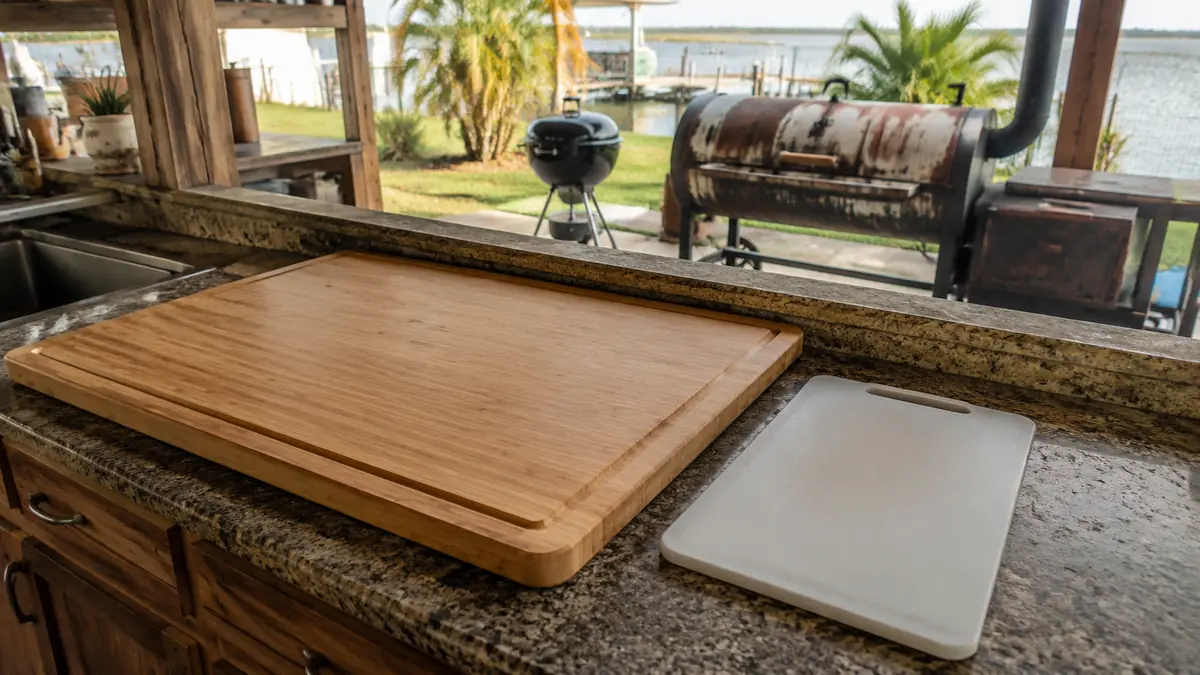
If you want the short answer before I get into specifics, I still own both. The Greener Chef 30 by 20 carving board handles anything that comes off my 22-inch kettle or my offset smoker in real volume, a whole brisket, a full turkey, a pork butt big enough to feed Kara, Beto and the grandkids on a Sunday. A plain plastic cutting board handles everything else, the onion I'm chopping on a Tuesday, the chicken thighs I'm trimming before they hit the grill, the quick jobs that don't call for a board the size of a serving tray. Neither one replaced the other completely in my kitchen, and if someone tells you a wood carving board makes plastic obsolete, they haven't actually used one for two years the way I have.
This isn't a piece where the wood board wins every category because it's the one I'm recommending. Plastic genuinely wins on some fronts, and I'll say so plainly below, row by row. What I can tell you from real use is which board earns its keep for which job, because I've carried both across my kitchen more times than I can count, and I've made the wrong call trying to force one to do the other's work more than once, including a Thanksgiving where I regretted not having the Greener Chef board yet.
I put this comparison together the same simple way I'd walk a neighbor through it if they asked me over the fence, by writing down what actually happens with each board on a normal week and letting the honest answer fall out of that, not by trying to make one board look bad so the other looks better. Some of these categories weren't close. Others surprised me a little, even after owning both this long.
| Greener Chef Board | Plastic Board | |
|---|---|---|
| Max meat capacity | 30 by 20 inches, fits a whole packer brisket or full turkey flat | Typically 15 by 11 inches, a brisket hangs off both ends |
| Juice containment while carving | Deep perimeter groove with a pour spout, holds close to a cup of liquid | Shallow or no groove, juice runs onto the counter |
| Knife edge friendliness | Bamboo is softer on blades, holds an edge longer between sharpenings | Harder surface dulls a knife edge faster over time |
| Durability with proper care | Built to last years if oiled regularly, backed by a lifetime replacement policy | Warps or grooves out from knife scarring after a few hard years |
| Dishwasher safe | No, hand wash only or the finish breaks down | Yes, top rack in most cases |
| Sanitizing after raw poultry | Porous surface, needs careful hand cleaning, no bleach soak | Nonporous, safe for a hot dishwasher cycle or a bleach solution |
| Weight and one-handed carrying | Heavy enough that carrying it loaded is a two-hand job | Light enough to carry one-handed even full of scraps |
| Fits in a standard kitchen sink | No, too large, needs a tub or an outdoor rinse | Yes, washes and rinses in a normal sink |
| Ongoing maintenance required | Needs oiling roughly every 10 days in humid climates | None, wipe and store |
Where the Greener Chef Board Wins
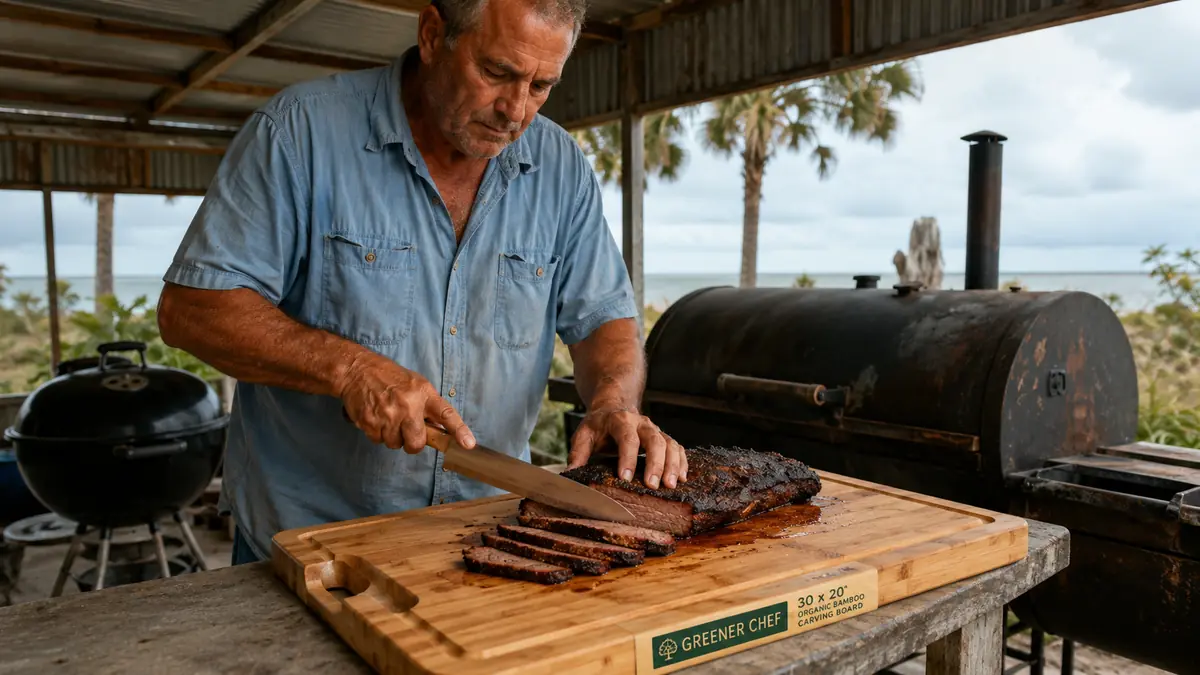
Size is the whole reason I bought the Greener Chef board in the first place, and it's still the biggest gap between the two. Thirty by twenty inches gives me room to lay a whole packer brisket flat with space left over on every side, or rest a fifteen pound turkey with enough clearance for a carving fork and a growing pile of sliced meat that doesn't slide toward the edge. My plastic board, the kind you'll find in any kitchen aisle, is built for a chicken breast or a couple of onions, not a brisket that's been on the offset for twelve hours. I go into the full experience of using that size for a season in my long-term Greener Chef review if you want the details.
The juice groove is the second win, and it's not a small one. A rested brisket weeps a real amount of liquid, sometimes close to a cup if I pulled it a touch early, and the trench cut into the Greener Chef board catches every bit of it instead of letting it run off onto the counter or the floor. It feeds into a spout on one end, so I can tip the board and pour that liquid straight into a bowl. Kara spoons it back over the sliced meat now the way you'd use au jus. A plastic board with a shallow decorative groove, or no groove at all, just can't do that job, no matter how good the knife work is.
The bamboo surface is also easier on a knife edge than the harder plastic I used before, and I've noticed I'm sharpening less often since I switched most of my meat carving over to the Greener Chef board. Add the lifetime replacement policy behind it, and it's built to be the board I own for a long time, not one I'm replacing every couple of years the way I did with plastic before this. I haven't had to use that policy myself, the board is still the original one I bought, but knowing it was there made it easier to spend real money on a single board instead of grabbing another cheap plastic one.
Where the Plastic Board Wins
I'm not going to pretend plastic loses across the board, because it doesn't. My old cutting board goes in the dishwasher without a second thought, and that matters more than people give it credit for on a Tuesday when I'm just trimming chicken thighs before they hit the grill. The Greener Chef board never sees the dishwasher, not once in almost two years, because the heat and standing water would ruin the finish. Hand washing and drying it fully takes real time, and some nights I just don't have the patience for that on a board I only need for five minutes of prep.
Raw poultry is the other place plastic genuinely has the edge. A nonporous plastic surface can go through a hot dishwasher cycle or handle a bleach solution without a second thought, which matters when I'm breaking down a whole chicken before it goes on the kettle. Wood needs gentler handling, and I don't run raw chicken across the Greener Chef board for that reason. It stays reserved for meat that's already cooked and resting, brisket, turkey, pulled pork, not raw prep work, and I'd tell anyone considering a wood board to keep a plastic one around for that exact job.
Weight and storage are the last two, and they're not minor. My plastic board weighs almost nothing and slides into a cabinet drawer without a thought. The Greener Chef board is heavy enough that I carry it with both arms against my chest, and it doesn't fit in my kitchen sink at all, so washing it means the tub or an outside hose, which isn't fun on a cold January morning even here on the Gulf Coast. Plastic asks for zero maintenance beyond a wash, while I'm oiling the bamboo board roughly every ten days to keep it from cracking in this humidity. If you want fewer chores, plastic wins that argument outright.
There's also the simple fact that plastic boards are easy to keep as spares. I've owned three or four plastic boards over the years, rotating one out when it got too scarred up for comfort, and it's never felt like a big decision. Nobody frets over replacing a plastic board. That casualness has real value if you don't want gear that asks anything of you between uses.
Tired of a Board That's Too Small the Second the Meat Gets Serious?
A standard plastic board is fine for weekday prep, but it can't hold a whole brisket or catch the juice when it matters. The Greener Chef 30 by 20 board was built for exactly that job. Check today's price and current availability on Amazon.
Amazon Check Today's Price on Amazon →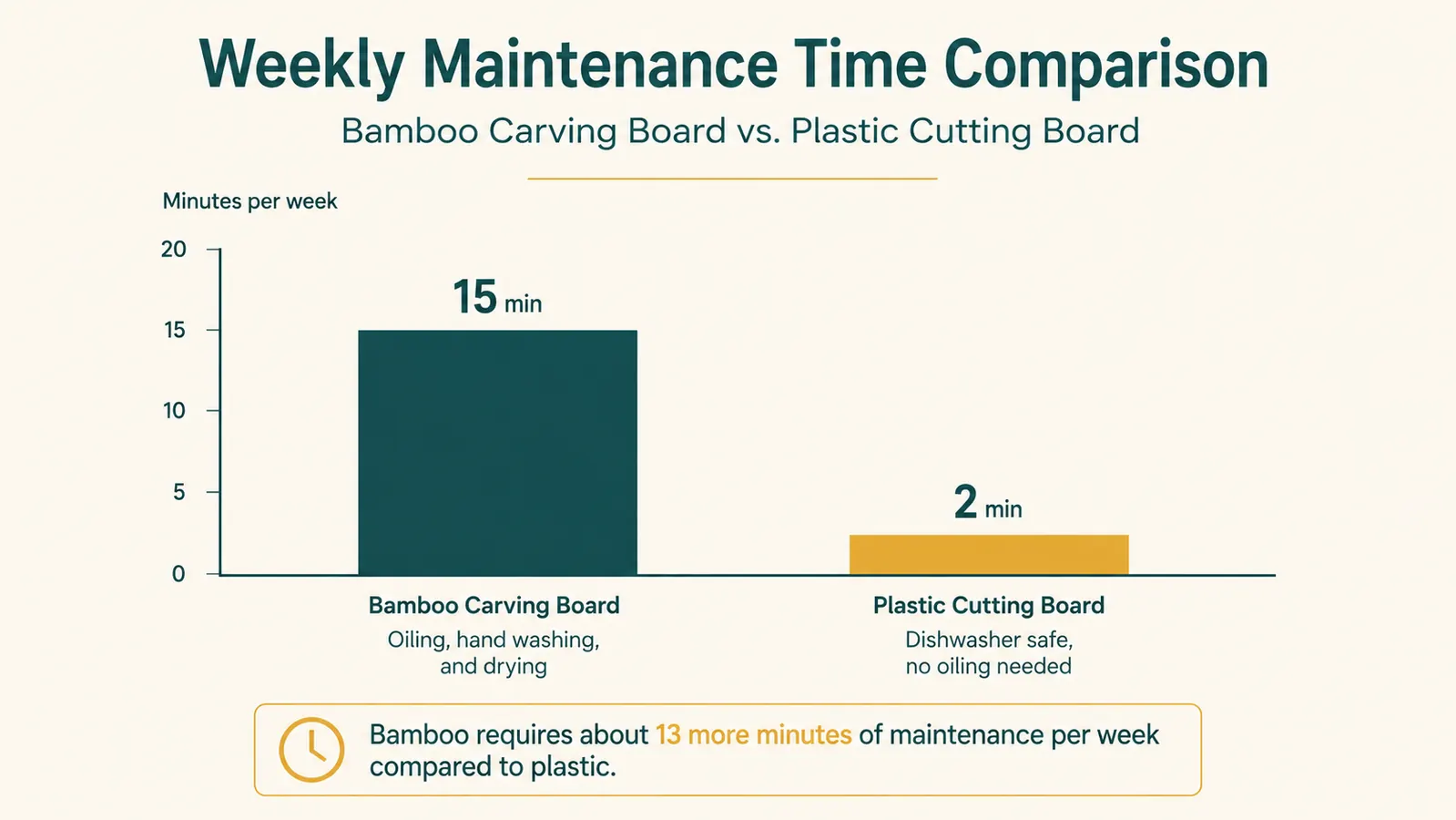
How I Actually Split Time Between the Two
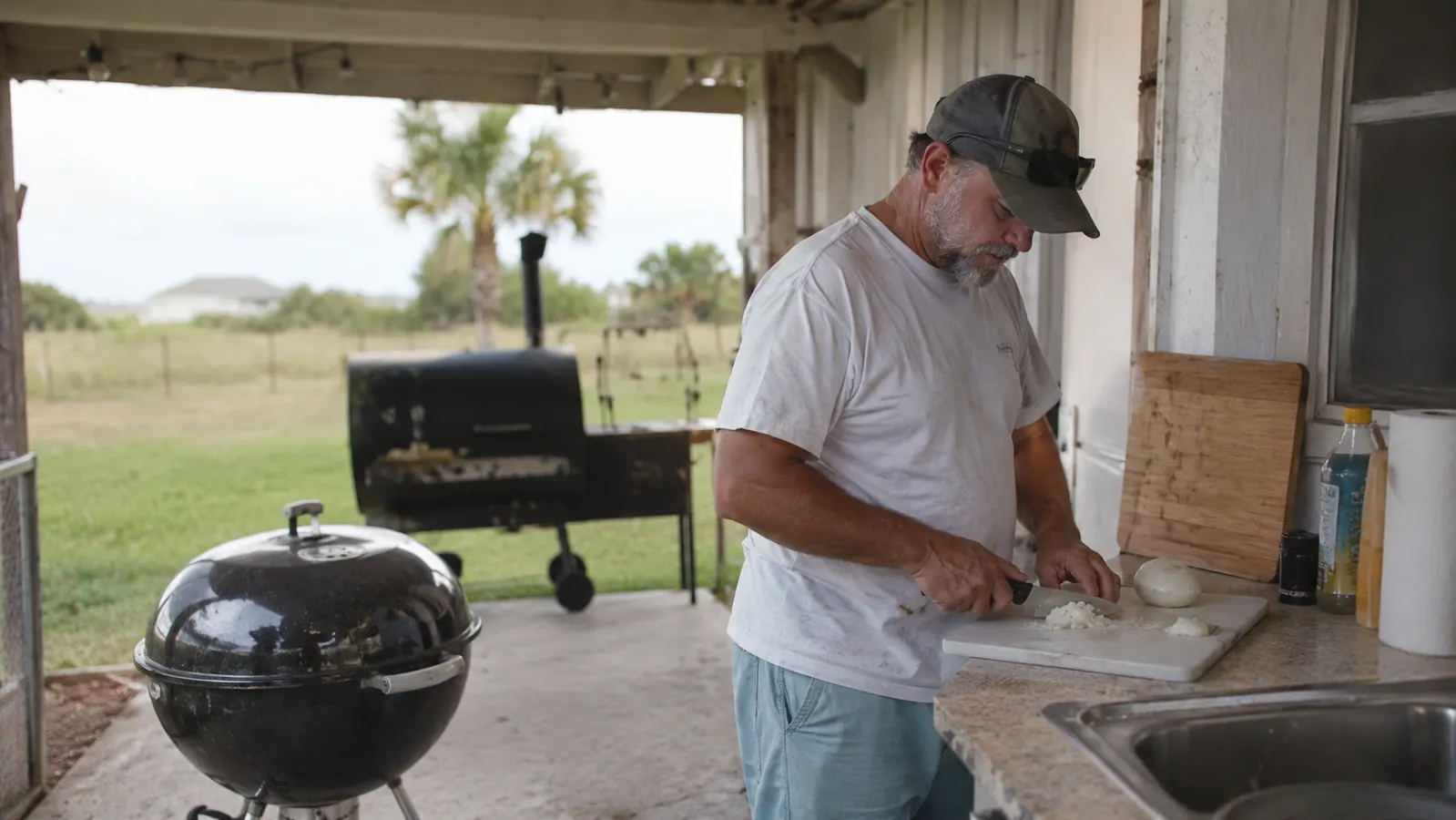
In practice, the split in my kitchen is simple and it's held steady for close to two years now. The Greener Chef board comes out for anything that's about to feed a crowd, brisket most Sundays, turkey at Thanksgiving and Christmas, pulled pork when Hollis and half the block show up. It lives standing on edge in the gap between the fridge and the wall between cooks, which is the only spot in my galley kitchen big enough for it. The plastic board never leaves the counter near the stove, because it's what I reach for a dozen times a week for smaller jobs that don't justify hauling out something the size of a serving tray.
That division also shapes how I rest and carve, and I walk through the whole process step by step in how to rest and carve a brisket without losing the juices, including why the board you pick changes what happens in those first few cuts. Short version: I wouldn't try to rest a full brisket on my plastic board again after having the bigger option. It's not that plastic can't hold the meat, it's that it can't hold what comes off the meat once the knife goes in.
It took me a full season to settle into that split without thinking about it. The first few months, I'd catch myself hauling the Greener Chef board out for a job that really just needed the plastic one, mostly out of habit from being excited about the new gear. These days it's automatic. If Marisol tells me she's expecting a full house on Sunday, the big board comes out of its spot by the fridge before the charcoal is even lit. If it's just the two of us and a couple of chicken breasts, the plastic board never leaves the counter.
Plastic is the board I don't think about. The Greener Chef board is the one I plan Sunday around.
Who Should Buy Which
If you cook whole birds, full packer briskets or pork butts big enough to feed a real crowd on any kind of regular schedule, the Greener Chef board solves a problem plastic genuinely can't. The size and the juice groove aren't marketing details, they change what happens on carving day, and I cover more of the everyday reasons that size earns counter space in 10 reasons a big carving board earns counter space. If your grilling stays smaller scale, a couple of steaks, a rack of ribs, chicken thighs for two, you don't need to replace your plastic board at all. Keep it, and add a wood carving board only when the meat coming off your grill or smoker starts outgrowing what you own now.
Most people who cook the way I do end up owning both, the same way I do, because they're not actually competing for the same job. Plastic handles the daily grind, the quick jobs, the raw prep nobody wants to think twice about. The Greener Chef board handles the day the whole family shows up hungry and the meat is too big and too juicy for anything else in the kitchen to hold it. I'd rather own one of each doing what it's actually good at than one board trying to do everything and doing most of it just okay.
Ready to Give Your Brisket a Board Big Enough to Hold It?
I kept my plastic board for everyday prep and added the Greener Chef board for everything that needs to feed a crowd. See today's price on Amazon and check current stock.
Amazon Check Today's Price on Amazon →